Sew Your Own Custom Back-Wrap Top

Make your own sewing pattern for a custom wrap top. Step by step photos of sewing process included!

Ready to get your sew on? If you liked the back-wrap top I shared last week, then check it— I’m back with detailed instructions! I hope you won’t be too intimidated to give it a go. If you’re worried about making darts, you can start out with a knit fabric instead of something woven. And you don’t have to make it reversible, but then it would only be half the fun. Point is: You make the rules! If you do make your own, though, just do me one little favor. Link it up, babies!

Make your own sewing pattern for a custom wrap top. Step by step photos of sewing process included!

Make your own sewing pattern for a custom wrap top. Step by step photos of sewing process included!

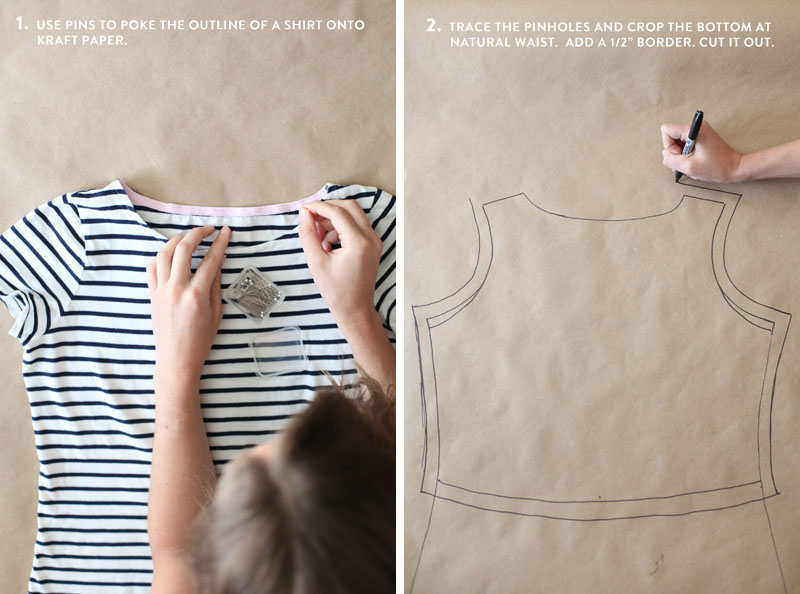
Step One: Find a shirt that fits closely (but doesn’t stretch) to your figure. Transfer its shape to a piece of kraft paper by poking holes along its border with straight pins. You may also chose to trace the shirt with a fabric pen.

Step Two: Trace the pinhole outline with a pen, cropping the shirt at its natural waist. It’s better to crop it longer than you may eventually want it and you can trim it down later. Add a 1/2″ border to the outline for hem allowance. Then Cut out the piece of paper.
Make your own sewing pattern for a custom wrap top. Step by step photos of sewing process included!

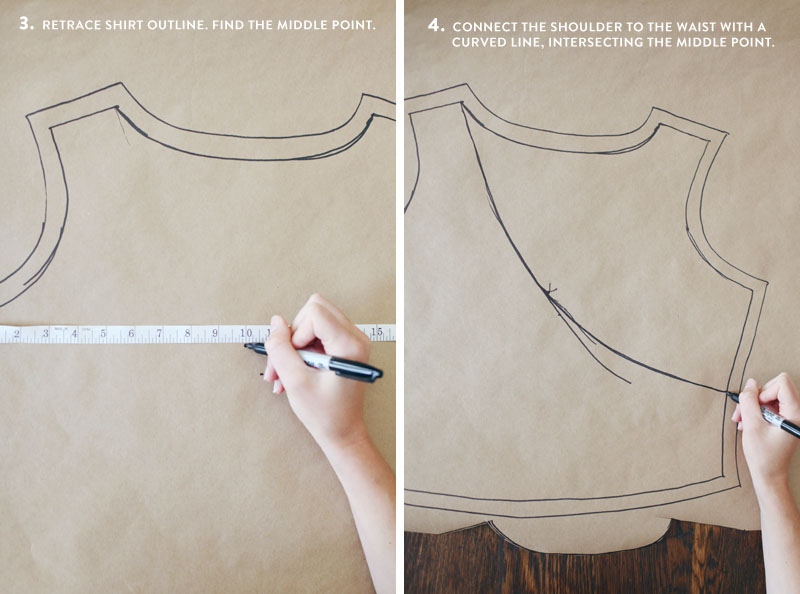
Step Three: Trace the pattern from step two, and indent the outline of the 1/2″ hem allowance. Find the middle of the piece between the armpits.

Step Four: Draw a curved line from the inside, top of the shoulders to the waist, just about 3-4″ from the bottom. Make sure the line you draw intersects the middle point you marked in step three. Cut out the paper along the curve, flip the paper up-side-down and trace it to create the other side of the back.

Make your own sewing pattern for a custom wrap top. Step by step photos of sewing process included!

Step Five: I got a little creative with the neckline by making a ’50s style v-shape. I also created extension pieces for each of the back wrap pieces, each measuring 19″ in length. I decided on their length by having a friend hold ribbon pieces at my waist, tying them comfortably at the front of my waist, and trimming the excess ribbon. Each piece measured 19″ long.

Make your own sewing pattern for a custom wrap top. Step by step photos of sewing process included!

Step Six: Pin the pattern pieces onto your both layers of coordinating fabric and cut out each piece. Make sure as you stack the coordinating fabric that the right sides are facing each other or away from each other. I laid out my pattern pieces on the bias (diagonally) so the fabric would stretch a bit against my curves. I was able to get the back wrap pieces and their extensions all in one piece, instead of cutting out the extensions separately and connecting them.

Make your own sewing pattern for a custom wrap top. Step by step photos of sewing process included!

Step Seven: Begin the process of making bust darts by finding the middle part of the front piece. Then measure out 4″ from the middle point on each side. This is the measurement I used to make my darts after holding the fabric to my body and judging where they should go.

Make your own sewing pattern for a custom wrap top. Step by step photos of sewing process included!

Step Eight: Measure 1.25″ out from the points you just marked in step seven. This will be the width of your darts.

Step Nine: Place a dot in between the two dots from step eight, then measure up 5″. Connect the dots to create the lines for the darts.

Make your own sewing pattern for a custom wrap top. Step by step photos of sewing process included!

Step Ten: Create darts using a similar technique on the sides of the front piece. Again, I measured my darts according to my own body, but if you are similar to me, you may want to measure 5″ down from the armpit hole for the top line of the dart. Then go down 1.25″ for the bottom line of the dart. The point of the dart was positioned 1″ above the point of the bottom darts, as shown in the above image. Connect the top, middle, and bottom lines of the dart to the point.

Make your own sewing pattern for a custom wrap top. Step by step photos of sewing process included!

Step Eleven: Iron the darts so that the crease is right at the middle line of each dart. Then stitch along the outside lines of the darts. Then Iron them flat.

Make your own sewing pattern for a custom wrap top. Step by step photos of sewing process included!

Step Twelve: Begin assembling the top by placing the back wrap pieces face-to-face onto the front piece. Pin along the shoulders and sides and stitch together, 1/2″ from the edge. Then iron the hems flat to prevent bulk when assembling the entire pieces in the next step. You may be able to see that I also sewed darts into the back wrap pieces for an extra fitted design, but it’s really not necessary due to the wrap style.

When you are finished connecting the pieces, make sure it fits you properly. If it doesn’t, you’ll need to make the proper adjustments before continuing.

Make your own sewing pattern for a custom wrap top. Step by step photos of sewing process included!

Step Thirteen: After you’ve completed steps 1-12 with a coordinating fabric (make sure the patterns don’t show through each fabric), fit the pieces together carefully, face-to-face. At this point you are checking to make sure the armpits and shoulders match up. This is why you need to cut both fabrics at the same time and stitch precisely 1/2″ from the edge of the fabric. If they don’t match up at this point, you will need to rip out the hem and correct the fit of one of the pieces.

Pin together the pieces along the neckline, reaching all the way to the ends of the wrap extension pieces. Then stitch 1/2″ from the edge.

Make your own sewing pattern for a custom wrap top. Step by step photos of sewing process included!

Step Fourteen: Cut little slits along the neckline and other curved areas where you have stitched. This will prevent puckering after you flip the piece right-side out.

Make your own sewing pattern for a custom wrap top. Step by step photos of sewing process included!

Step Fifteen: Now pin along the bottom edge of the two pieces and stitch them together everywhere except along the front. This open part is where you will flip the piece right-side-out in the next step.

Make your own sewing pattern for a custom wrap top. Step by step photos of sewing process included!

Step Sixteen: Now you can flip the top right-side-out through that opening you left in the previous step. Use a capped pen to help you with the pointy ends of the wrap extension pieces. Now iron along the hems to flatten it out. Flip under the open section of the front and iron along with the rest of the bottom hem.

Make your own sewing pattern for a custom wrap top. Step by step photos of sewing process included!

Step Seventeen: Pin along the opening of the front, where you just ironed, and then stitch it closed, very closely to the edge of both layers of fabric.

Make your own sewing pattern for a custom wrap top. Step by step photos of sewing process included!

Step Eighteen: Cut little slits long the armholes to prevent puckering after finishing them.

Make your own sewing pattern for a custom wrap top. Step by step photos of sewing process included!

Step Nineteen: Fold under the fabric along the armholes, ironing as you go along. Work one fabric side at a time.

Step Twenty: After each fabric side has been folding under at the armpit holes, each fabric side’s edge matching up, pin the two faces together and then stitch very closely along the edge.

I hope to get a lot of wear out of this top through the Summer— with high waisted shorts, skirt, and even over top of dresses. Yep, it’s a suitor!
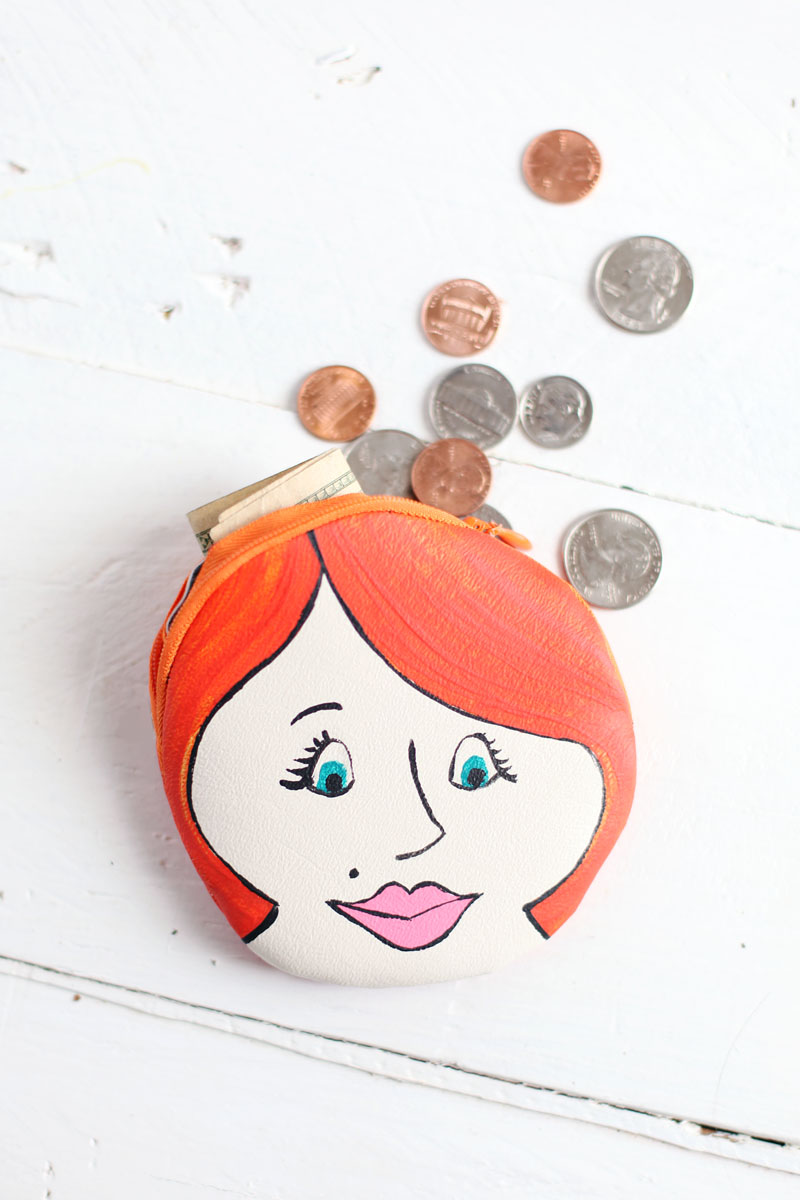
Make This Painted Lady Change Purse

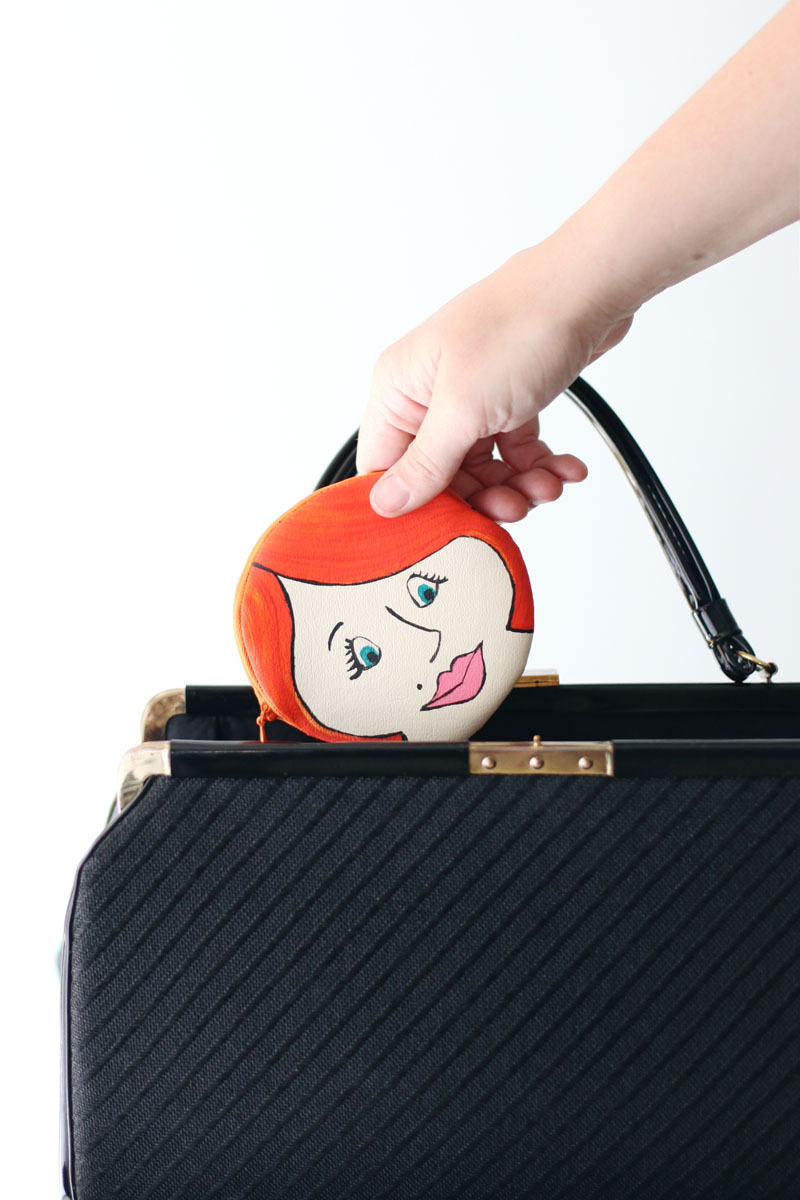
fun little sewing/painting DIY: Painted Lady Change Purse

I may or may not have a thing for painted ladies. And I’m not talking about ladies who wear makeup (Though, by all means, rock on, makeup-laden ladies!), I’m talking about ladies who paint fun ladies, like Tuesday Bassen and her fabulous girl plates. I think it started way back in the days of my youth when I enjoyed eating bowl after bowl of apple cinnamon Cherrios from my amazing stackable bowl set (Remember those?!).

Well, regardless of its nostalgic origin, I’m definitely keen on kitschy painted faces, and thought a fun application for my own painted lady would be a cute little change purse. Check out the steps below to make your own!

fun little sewing/painting DIY: Painted Lady Change Purse

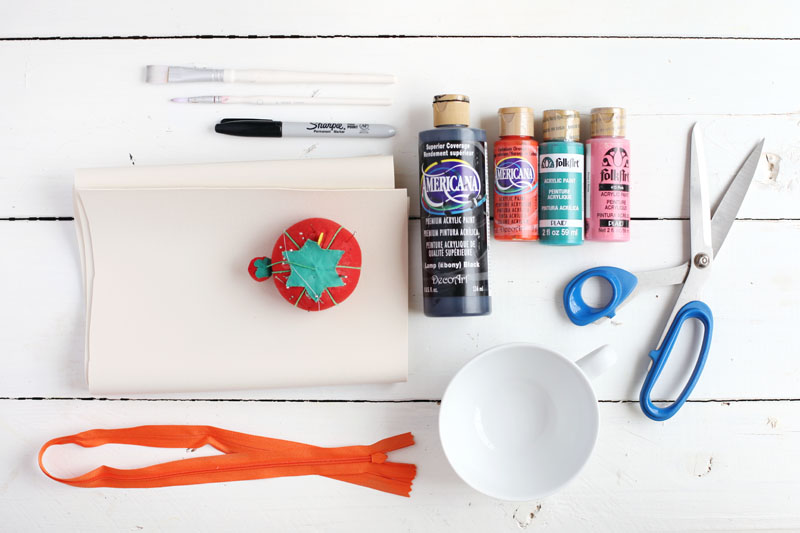
Supplies:

  • Small piece of vinyl
  • Invisible zipper
  • Paint to match zipper color (This will be the lady’s hair color.)
  • Thread to match the zipper
  • Acrylic paints (in colors to paint a face)
  • Marker
  • Pencil
Tools:
  • Straight pins
  • Fabric scissors
  • Sewing machine
  • Paint brushes (Fine and medium tip will do.)
  • Round object to trace (I used a cappuccino cup.)

fun little sewing/painting DIY: Painted Lady Change Purse

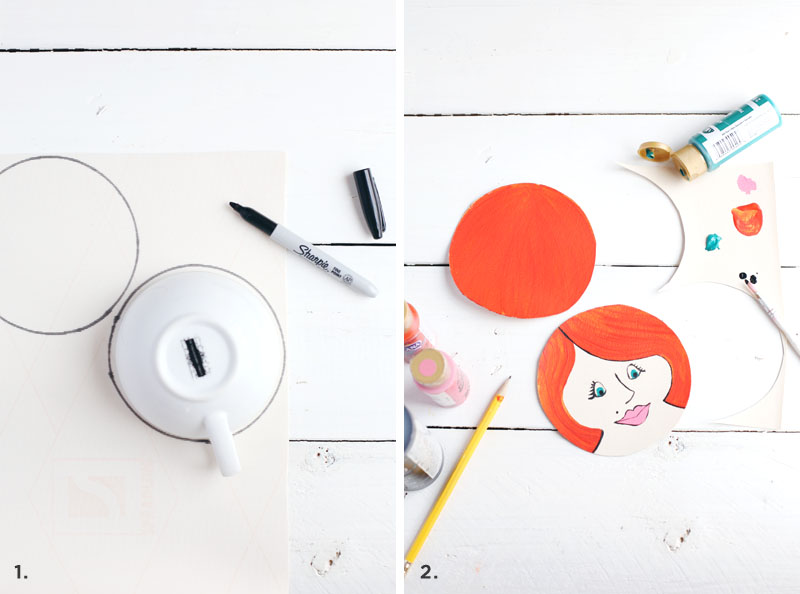
Step One: Using a marker, trace the outline of a large mug or small saucer onto the vinyl and cut out each circle.

Step Two: Draw your lady’s face with pencil onto the vinyl, and then fill in with acrylic paint. I chose to outline the features in black paint. You can make your lady’s face as fun, graphic, or kitschy as you like! Just make sure you keep in mind that about 1/4″ around the edge will be hidden in the seam.

fun little sewing/painting DIY: Painted Lady Change Purse

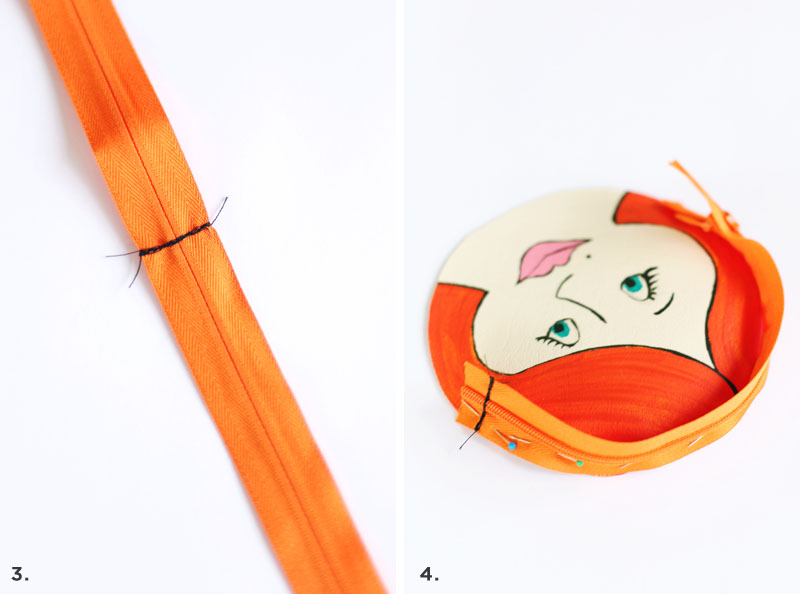
Step Three: Shorten the zipper to a size that will wrap around half of the change purse (about half of the circumference of the circles you cut out). Do this by stitching the zipper at the desired length and trimming off the excess. Use a thread that matches the color of your zipper— I only used black so it is clearly visible for teaching purposes.

Step Four: Pin the zipper onto the face of the vinyl as shown in the above image. Then stitch it down to the vinyl using a zipper foot on a sewing machine.

fun little sewing/painting DIY: Painted Lady Change Purse

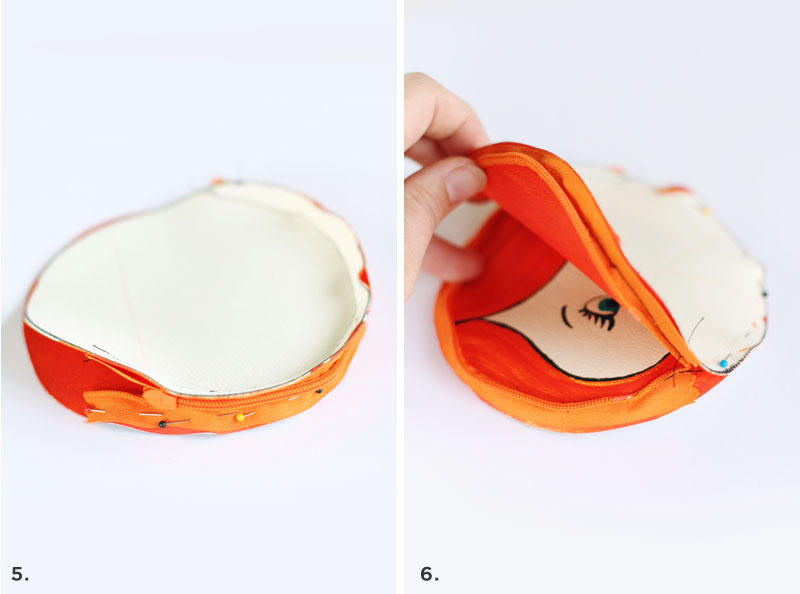
Step Five: With the zipper closed, pin it to the good side of the other circle of vinyl, in the same way you did the front side. Stitch it down, removing the pins as you go along.

Step Six: With the zipper partially open, pin the non-zippered sides of the front and back pieces together. Then, open the zipper completely before stitching along the pins. Begin and end this stitch to slightly overlap the edges of the zipper. Keep your stitches in line with the zipper stitches, making your hem about 1/4″ in from the edge.

fun little sewing/painting DIY: Painted Lady Change Purse

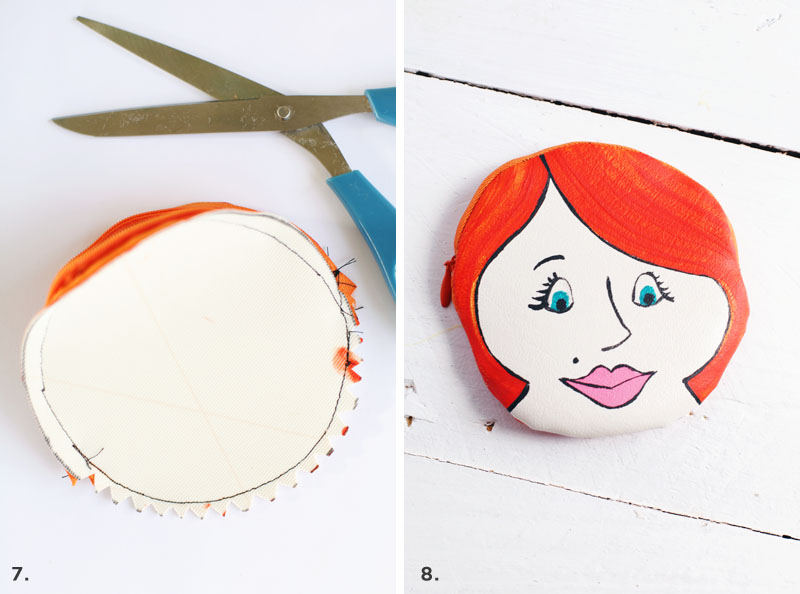
Step Seven: Use your scissors or pinking sheers to cut little triangles into the edge of the seam you just made. This will keep the vinyl from puckering when flipped right-side out.

Step Eight: Flip the purse right-side out, and use your finger from the inside of the change purse to push out any puckering around the edges.

fun little sewing/painting DIY: Painted Lady Change Purse

fun little sewing/painting DIY: Painted Lady Change Purse

Voila! Now I have a fun little conversation starter for when I’m digging out coins to pay for a friend’s cup of coffee. This would be a fun idea for a child’s purse, too! I had a lot of fun making this, because I had a change to both paint, and sew, but it didn’t take too long to finish the project from beginning to end. Perfect for a Saturday afternoon craft, eh?

Online Sewing Class for the Creatively Curious

Online Sewing Class

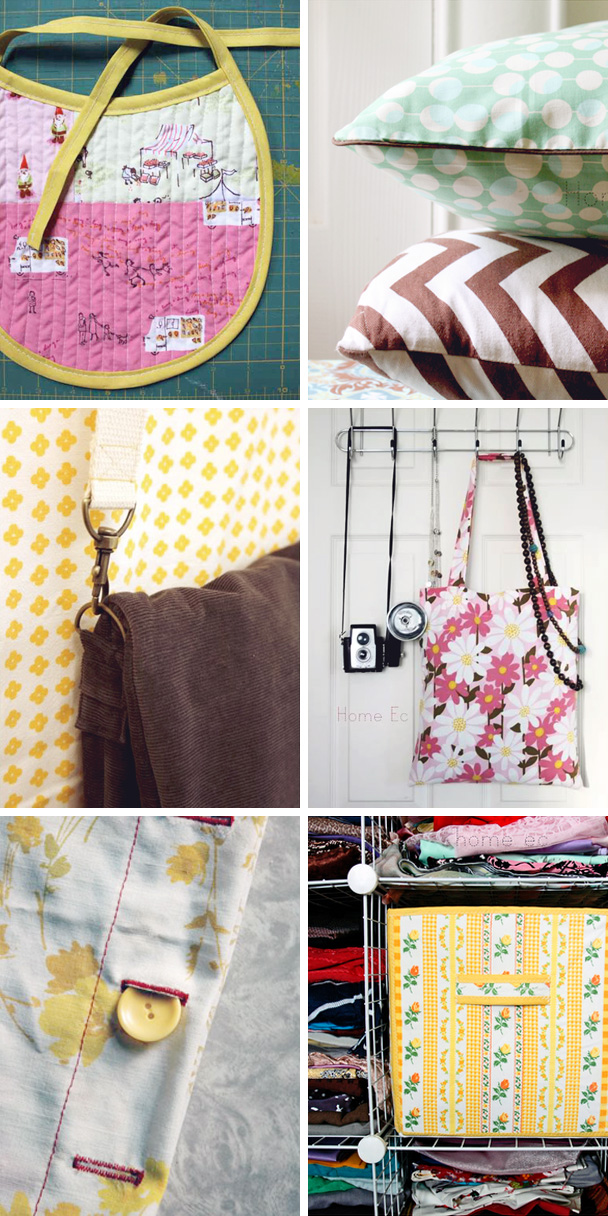
Sewing has been a craft that I find more fulfilling than any other. The excitement of envisioning a project and seeing it come to completion just can’t be beat! A lot of my friends have confessed their intimation of sewing to me, and wouldn’t even know where to begin when it comes to reading a pattern. I used to be that way, but now I’m even sewing my own clothes! I always say that if you want to learn a skill, it doesn’t necessarily take talent, it just takes curiosity. If you’re not sewing savvy, but you’re creatively curious and wanting to tackle projects you never thought you could do, the Home Ec E-Course is just the place to start.

Hosted by the savvy DIY queens Rachel Denbow, Leigh-Ann Keffer, and Courtney Janelle, Home Ec offers comprehensive lessons for beginner and novice seamstresses covering anything from sewing pillows with fancy piping to actually creating your own patterns. Check out the course outline, meet the teachers, and read the testimonials of past Home Ec students, or just skip right to registration here!

Online sewing class for beginnersOnline sewing class for beginners

 Older