Movie Mondays: Kiss Me Stupid 1964

Kiss Me Stupid was surprisingly well reviewed on Netflix, and even heralded as many reviewers’ favorite Dean Martin flick. Being a fan of the cheesy, Dino-always-gets-the-girls musical plots and 1960s style, I was intrigued and wondered why I had never seen this Billy Wilder movie form my favorite decade in film. I’ve always loved the beloved director’s off-beat comedic style of sardonic story-telling, and knowing the strength of the top billing actors, I was all set to enjoy this classic film. Though, honestly, I ended up walking away pretty disappointed.

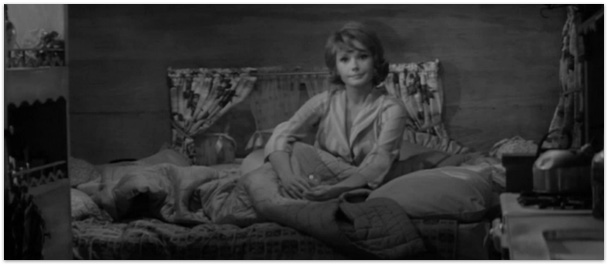
The best part about the movie, in my opinion, is the unique angle where Dean Martin actually plays a version of himself- Dino- a famous nightclub singer and musical performer with an infamous reputation for the bottle and the babes. The story is set up by introducing us to small-town piano teacher, Orville, who writes fluffy love songs, dreaming of selling a hit song one day, and constantly worrying that his beautiful wife will realize what a flop he is and leave him for someone else.

Orville is beyond excited and hopeful with Dino actually stops into his town for a gasoline fill-up, and after having a friend tinker with Dino’s fuel line, the two concoct a plan t to host Dino at Orville’s house, and sell the famous singer on one of their songs while he’s stranded in their town. There’s just one problem- Orville’s beautiful wife, Zelda, admits to being head-over-heals for Dino, and Dino certainly doesn’t hide his curiosity about Zelda, using her curvaceous dress form as a hint of things to come. Orville has got to get his wife out of the house, and find a replacement for her, before Dino either sweeps his wife off her feet, or Dino leaves town and Orville’s chance of selling a hit song is gone forever.

The storyline is a great start for a fun film with plenty of situational irony, and with Billy Wilder at the helm, I didn’t think anything could go wrong. Especially not with the ever watchful eyes of a still-conservative 1960s movie studio, right? I suppose you could still say the story was expertly told with excellent acting and beautifully paced scenes. There was a little music, but I certainly wouldn’t call this a musical. All of the characters were likable and despicable in their own right. All of these are good things. I was just really disappointed by how so much of the humor revolved around marital jealousies and infidelities. The plot focused around how a scummy musical star’s visit to a small town sets everyone to spinning, and while the characters each grew in their own right, I just really hate the overall message that cheating is normal, and even funny. So there you have it. If you can personally get past that major aspect of the movie, I would say it’s a great piece of storytelling through film. But it just didn’t float my boat, and so I’ll count this one as a loss.

Movie Mondays | Pillow Talk 1959

Two young, single New Yorkers are forced to share a phone line, and tensions are running high! On one side of the party line is Brad Allen (Rock Hudson), a womanizing bachelor who keeps a steady schedule of romancing a rotation of gullible women on the phone. On the other side is Jan Morrow (Doris Day), a professional interior decorator who just needs to call her clients- but every time she picks up her phone, all she hears is Brad singing the same old love song to a different girl each time. Amidst the battle over the telephone, Brad starts to make Jan wonder if perhaps she really is just a bitter, single girl who resents the romance on the other side of the phone. Maybe she could use a little excitement in her life?

While dining at the same nightclub, Brad overhears Miss Morrow’s name, and is curious to discover what the other end of his party line looks like. Turns out the crabby lady who annoyingly interrupts his phone calls is actually quite the looker. So, of course, being the lady killer that he is, Brad decides to try to seduce the woman who already despises him, though they have never met in person. Well, she knows his voice from their telephone calls, so he dons a (comically horrible) Texan accent, and turns on the charm. But as their dates fly by, Brad realizes he’s falling in love with Miss Jan Morrow. How much longer can he keep up the charade?

Pillow Talk is one of the most iconic Doris Day movies, matching her up with her most popular costar, Rock Hudson, and sprinkled with the perfect amount of singing (without pushing the film into musical-territory) and oodles of style. The humorous storyline is well paced, and even somewhat believable, as far as late ’50s comedies go. Real-life friends Day and Hudson bring so much chemistry to their romantic roles, it makes you wish they had been a couple in real life. Of course, Rock Hudson was a homosexual, and if you know this, you’ll appreciate some side-line comedic plots that imply quite a bit for the 1950s!

As you can see, the fashion and styling alone make this classic comedy worth watching. Add its pitch-perfect humor and charming characters, and you’ve got a must-see movie!

Eames: The Architect and The Painter 2011

Charles and Ray Eames: The Architect and The Painter

They were certainly a lot more than chair designers. And no, Charles and Ray Eames were not brothers, as Phil had always thought before we finally sat down together to watch the documentary about the famous married designers. In design school, there was not a lot said about their lives outside of the famous chairs, but Charles and Ray Eames were more than designers- they were communicators who used images rather than words.

Charles and Ray Eames: The Architect and The Painter Charles and Ray Eames: The Architect and The Painter Charles and Ray Eames: The Architect and The Painter

It’s not often (if ever?) that I review a documentary as part of the Movie Monday feature, but after I finally watched the Eames documentary, I thought some of my creative blog friends might enjoy watching it too!

The documentary begins by detailing the evolution of the famous Eames chair, a collaboration between Charles Eames and Eero Saarinen. I studied this in school, but it was interesting to see how the project had actually failed according to their end goal, something that isn’t talked about much when highlighting the careers of Eames and Saarinen. What a comfort, knowing such successful people began their careers with failure. In any case, the project brought Charles and Ray together, who soon married and started their own design office together.

The couple’s main focus in the beginning of their joint careers was creating a simple chair of molded plywood that would be mass produced and easily affordable to the public. After lots more failures, they finally achieved their goal, and continued to design various styles of chairs which were then produced and distributed by Herman Miller.

Later, the couple, in conjunction with their staff (who often receives little, if any, credit for their work on Eames projects), moved onto other projects, like arm films, documentaries, and even educational film.

Charles and Ray Eames: The Architect and The Painter Charles and Ray Eames: The Architect and The Painter Charles and Ray Eames: The Architect and The Painter

The documentary is interesting if you enjoy mid century design, and it’s certainly encouraging to any designer or entrepreneur, but more so than that, it allows a glimpse into the personal lives of two eccentric people who shaped the face of American design in the 20th century. Ray, being a woman, was often dismissed for her involvement in projects, because the public just didn’t understand that a woman could be a successful designer too. It’s interesting to see how her usefulness in the office affected their relationship at every turn.

Oh, and if you think that modern designers have boring, sterile homes- think again! I loved taking a peek at Charles and Ray’s warm home that was just brimming with Ray’s quirky touches. Just as awesome are their playful portraits they made as a couple and with their staff. Talk about inspirational!

In closing, I would like to share some of Charles Eames’s quotes that I wrote down through the documentary. And there are even more! That guy sure was clever.

“Anything i can do she can do better.” (regarding Ray’s involvement in the office)

“The container for your life can be simple, but that doesn’t mean your life has to be simple.”

“Take your pleasure seriously.”

“Never let the blood show.”

Charles and Ray Eames: The Architect and The Painter Charles and Ray Eames: The Architect and The Painter Charles and Ray Eames: The Architect and The Painter

 Older